


The enthusiast and expert duo on everything you need to know about Barossa shiraz, from winemaking to serving style.
As Australia’s first ever Bachelor, Tim Robards won hearts across the country (most importantly his wife Anna’s) and he’s been busy popping up on our screens ever since. But in between TV appearances Tim’s been spending his downtime exploring a new love — wine. These days it’s not unusual to see him hosting casual wine chats on Instagram as a part of his journey to explore and learn more.
Of all the wine varieties Tim loves, he has a particular soft spot for Barossa shiraz. When it comes to Barossa wine producers his number one pick is none other than esteemed wine label St Hallett, who are often considered as the masters of the grape.
With St Hallett about to release their latest vintages it was the perfect opportunity to pair up Tim with the label’s winemaker Helen McCarthy. Below, the duo chat all things Barossa shiraz with Helen offering up her winemaking expertise while Tim gives us his best tips for how to serve each new St Hallet release.
- Q.What first sparked your interest in wine?
Tim: When I was 18 and first tried red wine I thought it tasted like dirty water [laughs]. I just didn’t get it. But growing up in Newcastle, I eventually went on a wine tour of the Hunter Valley and got to listen to winemakers talking about wine and trying a few different styles. And all of a sudden it was like my brain switched on and now I love it.
Helen: I knew that I wanted to do a science-based degree that would get me a job in South Australia. A friend of mine suggested that I look into winemaking because it’s a science but also very creative. He got a lecturer to call me and I sat on the floor of my parents house talking to this guy I’d never met for two hours and he completely sold me on the industry.
- Q.Helen, you joined St Hallett in 2019. What drew you to the winery?
Helen: The singular focus on shiraz. It’s very different to what every other winery is doing. Normally, you have a plethora of varietals that you're working on and you never get to really focus on one. The other thing that encouraged me to come over to St Hallett is the history. On the property of the winery we've got some vines that were planted in 1912. But then some of the oldest vines we use are from one of our grower’s blocks that were planted in 1887. Roughly 40–50% of all the fruit that we use is from vines greater than 50 years old. St Hallett's always been a little bit left of centre and ahead of the game.
- Q.Tim, you’re a long-running St Hallett fan. Can you tell us about the first time you visited the winery?
Tim: The first time I visited I would have been about 25 years old. I still remember being so impressed and leaving with a few bottles. I’ve been back once or twice since then and obviously I’m dying to get back.
- Q.What is it about the Barossa that makes such incredible shiraz?
Helen: It's hard to generalise about the Barossa because it is so different from north to south and east to west. But generally, the climate is spot on with slightly warmer weather and it tends to cope well in drier conditions. That temperature gives more of the plushness and a riper fruit profile.
- Q.Are those big, plush flavours what make you a lover of Barossa shiraz, Tim?
Tim: Without getting too much into the wine speak, shiraz, especially like the St Hallett Blackwell Shiraz, makes me feel like I want to curl up next to a warm fire. It’s got that deep richness and robustness that everybody loves about a shiraz from the Barossa.

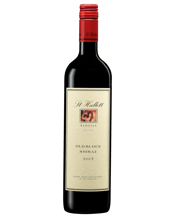
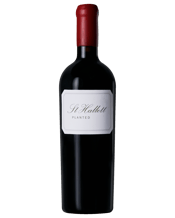
St Hallett 2017 Old Block Shiraz
Helen: To be an Old Block grower your vines have to be at least 50 years old. And in this year’s release we’ve got the oldest vines from 1870 and the youngest vines are 1936. Flavour wise, it’s got all of the dark fruits you'd expect from the Barossa Valley. But it's also got underlying violets and aromatics, almost like a little bit of bayleaf. On the palate it’s not heavy, it’s very structured but in an elegant way. This is one of those wines that’s fun to drink now and try while it’s young but you could also put it away for 20-30 years with the right cellaring.
Tim: If I’ve got a bottle of something that special I’d be hesitant to drink it with food. I’d really want to savour it and let it sit in the glass for a while. I think the only thing I would be chewing is ‘the fat’ with a good mate. There are some wines where you want to be really present and I think this is an important one of those.
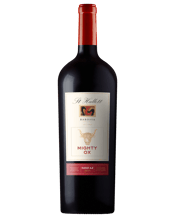
2019 Mighty Ox Shiraz
Helen: Mighty Ox is our nod to the more traditional Barossa style, so it’s a really big and powerful wine. This is also only the second vintage, but compare it to the Higher Earth Syrah and you realise they’re chalk and cheese. The Mighty Ox is a very bold, muscular wine. We only release it in a magnum because you wouldn’t want to be drinking it for about 10 years. It’d be hard to drink at the moment because it’s so big, rich, and ripe. The tannins are that broad style that you really feel in your mouth. It’s got quite a punch to it.
Tim: I’d buy two: crack one now, and then keep the other for 10 plus years. I’d also make sure I had a solid number of people around the table to share in the magnum sized bottle. It’s perfect for a BBQ alongside some dry aged meat with a little char to stand up next to the full flavour of the Mighty Ox. For me, it's big but rounded off nicely more in the mid to front of mouth compared to the Blackwell coming next.
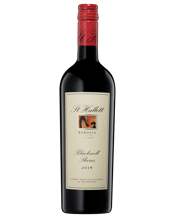
2019 Blackwell Shiraz
Helen: The first Blackwell Shiraz was released in 1994, so it’s got its own history already. And it was very left of centre for a Barossa shiraz at that time. It’s not totally swamped in oak, and has a beautifully rustic structure. It’s sourced from the Northern Barossa from a really tight grower network, with probably only five growers producing the majority of the fruit. We use a more traditional American oak for this, which gives it a real Barossa look. This wine is all about being supple, and very mouth-filling but at the front palate. It tastes really, really good with lovely notes that are almost like baking spices such as cinnamon and nutmeg. The good thing about Blackwell is that it’s ready to drink right now but if you did want to age it for something like eight years it would still hold up.
Tim: The Blackwell is one of my favourite Barossa shirazes of all time. It's big and juicy with lots and lots of layers that coats your mouth with flavour from front to back. It lingers and develops in the mouth — like an old polaroid photo being shaken around and developing before your eyes. I love it by itself but it also calls for some sort of juicy barbequed meat… I'm thinking wagyu.
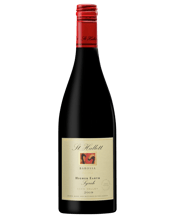
2019 Higher Earth Syrah
Helen: Syrah is the French version of shiraz and we call this one syrah because it’s very much in the vein of that type of spicy, structural red. This is only the second vintage, the first one was 2018. It’s got lots and lots of violets, lots of blue fruit, and a really tightly wound palate. It’s completely sourced from Eden Valley. There are only two sub-regions in the Barossa: Barossa Valley and Eden Valley. This wine particularly highlights the difference in those sub-regions, especially when you compare it to the Mighty Ox, which we’ll talk about next. It's elegant. It's finessed. It's just a really beautiful wine to sit there and look at. But it’s also very young, so for me I’d be putting this away for at least 12 months before opening.
Tim: For me, this one is a great kickstarter with a bunch of friends and some light canapés or cheese. Lighter and elegant with a unique tannin, I think of it as the sexy sister wine of the Mighty Ox. You might start with this to warm up your palate before venturing on to the big brother with the main course.



%20(1)?$dans-daily-web-image$&hei=900)
?$dans-daily-web-image$&fmt=png-alpha&wid=800)