


As we fight climate change and water shortages, it might be here sooner than you think.
Here’s a question: what do astronauts drink? It’s not the set-up for a joke (although if it was, the punchline would be gravi-tea or Starbucks or something). Rather – in a Bear Grylls-meets-science way – it turns out that astronauts on the International Space Station drink their own treated, purified wastewater. Well, 98% of it.
The idea has us thinking because, as we unite against climate change, being mindful of water usage is a critical part of our responsibility. There’s a knock-on effect with climate change when it comes to water, with a drier climate leading to greater evaporation of surface water and a growing reliance on groundwater that isn’t being fully refilled. In other words, water is getting scarcer.
This growing water scarcity means innovative water-saving measures are being implemented everywhere from international sport to healthcare facilities and in our homes. And, as environmentally-conscious breweries strive to limit water wasted in the brewing process, recycled water could be coming to a beer near you.
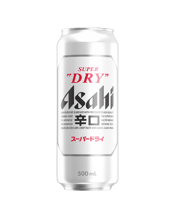
Before we dive into water recycling in breweries, a little context: just like us, beer is mostly water (roughly 95% for beer, versus up to 75% in humans), but the many stages of brewing use much more water than is found in the end product. For every litre of beer, even a water-saving brewery like Asahi still uses 2.82 litres of water – and that’s 40% less than a decade ago. When you consider that the multinational brewed a staggering 2 billion litres of beer last year, well, you can see where this is going.
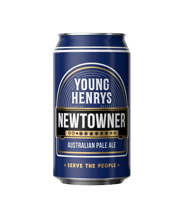
Like Asahi, plenty of breweries are trying to cut down on water usage. Young Henrys uses a specially-designed mash filter that reduces water consumption by 40%; certified B Corp Capital Brewing Co. has implemented steam traps and centrifuges to reduce its water waste; titan AB InBev is tackling the problem on an industrial scale, installing a solar and thermal-powered water desalination plant at its Canary Islands brewery. But, as ever, there’s more to be done.
All of those examples are valuable contributions to water conservation, but they don’t entirely fix the issue. If even the most water-efficient breweries are losing nearly two litres of water for each litre that ends up as beer, there’s ground to be made.
Returning to our astronaut friends, we can see an example of closed-loop water conservation. They drink the water, they excrete it as sweat or urine and – through distillation and some clever membranes – 98% comes back as pure, drinkable water. It’s undoubtedly a sci-fi approach (the Stillsuit from Dune comes to mind), but it has some pretty obvious applications in brewing. And we’re actually already seeing it.
For the United Nations’ World Water Day in 2020, excellent Byron Bay brewery Stone and Wood made Beer-Water Beer, a summer ale brewed with wastewater. In this case, the wastewater used was the leftover brewery liquid we were talking about before (not sewage) – what goes into the brewing process but doesn’t actually make it into the final beer.
For this brew, Stone and Wood took the hazy, opaque wastewater from its brewing process and stripped it of impurities using an in-house ultrafiltration and reverse osmosis (UFRO) system. The team posted a great video of how it’s done back in 2020 but, basically, the system passes water through a series of filters and membranes until all that’s left is pure, drinking-quality water. They were already doing this to reclaim water for utilities and cleaning, but Beer-Water Beer was an experiment in using that water within the actual brew. For now, the beer was a one-off, but it shows what’s possible.
Other Australian breweries are attempting similar projects, too. Lion’s Castlemaine Perkins brewery in Brisbane – the home of XXXX – has an on-site water treatment plant that can purify up to 2,800 kL/day but, like Stone and Wood, the reclaimed water is used in cooling towers, boilers and for cleaning, rather than in the final beer.
Outside of Australia, this wastewater beer thing is really getting serious. Breweries across the globe have been using purified wastewater to make their own beers, while Singapore’s NEWBrew is made with water from treated sewage – a treatment the island state is using more broadly to combat its own water insecurity.
Understandably, the public’s level of queasiness changes when it comes to recycling wastewater from the dishwasher to what was flushed down the loo. But across Australia, many regions treat all sorts of wastewater (including sewage) and reuse it to do things like irrigate parks, wash buildings or produce energy – although plenty is released back into the ocean, too.
In fact, drinking treated sewage – what the media likes to call, uh, ‘toilet-to-tap’ – has been on the cards generally for a while now. The technology is capable of purifying ‘recycled effluent’ beyond drinking standards, but it’s the stigma that stops most state governments from allowing wastewater to be considered potable, opting instead for building more desalination plants (which comes with its own downfalls). In 2006, as the millennium drought took hold, the Queensland city of Toowoomba famously voted against a scheme to recycle sewage (cleverly dubbed “Poowoomba”). And still today, Perth is the only region directly pumping recycled sewage back into the city’s water reserves. This means even the most climate-conscious breweries wouldn’t be allowed to bottle beer made with treated wastewater if they wanted to.
Recycled effluent is used for drinking water in parts of the US, Namibia, Belgium and the UK. Plus, it’s got Bill Gates’ backing and is, as we’ve mentioned, more than good enough for those brave souls whizzing around our planet in a low orbit. The problem isn’t the science – it’s in our heads.
With our water problems going nowhere, recycled water offers a clean and sustainable way for water-intense users (like breweries) to keep things in check. But, with the technology clearly available, it’s going to take forward-thinking breweries and open-minded drinkers to get us over the hurdle.
So, how about it? Would you drink beer brewed with recycled water? And how about treated sewage water? If it’s good enough for the astronauts…






%20(1)?$dans-daily-web-image$&hei=900)
?$dans-daily-web-image$&fmt=png-alpha&wid=800)