


But does it pass the pub test? We take a look at how the technology is impacting the drinks business.
Everybody’s talkin’ about artificial intelligence. ChatGPT this, OpenAI that. Open any social media platform and you’re only two scrolls away from an AI evangelist spruiking their latest masterclass. While it’s comforting to know that the wake-up-and-grind hustle-core set has a new toy to help them create “passive income”, we’re more interested in the technology’s real-world applications – specifically in the drinks business. Our question is, is AI changing the way we drink?
The short answer is yes. The slighter longer answer is yes, but in two distinctly different ways. When it comes to drinks, AI applications fall into two categories. On the one hand, there are the customer-facing, slightly gimmicky (not that there’s anything wrong with that) activations. Think recipe development, personalised recommendations and the like. On the other hand are the nitty-gritty behind-the-scenes developments that big brands use to streamline operations and lift the bottom line. Both indicate an industry-wide embrace of emerging tech; here’s how they’re shaking things up.
We’d wager that we’re a while off ceding the enormous responsibilities of distillers, brewers and winemakers to sentient robots. Or ever, really. But that doesn’t mean we can’t outsource a few things to ’em. AI’s ability to aggregate mammoth swathes of data makes it a valuable sidekick for human ingenuity – something Swedish whiskey distillery Mackmyra recently put to work in developing blend recipes.
Spawned from a 2019 collaboration with Microsoft and Fourkind, Mackmyra’s Intelligens Series is the algorithmic response to a simple brief: write the most lovable whiskey recipe possible. Crunching the distillery’s existing recipes alongside sales data and customer preferences, Fourkind’s AI was able to identify the traits that customers responded to best and roll them all into two new blends – Intelligens AI:01 and AI:02. Both err on the lighter, fruitier side, feature delicate citrus and spice notes and, crucially, boast overwhelmingly five-star customer reviews.
Initiatives of this nature are plentiful – Carlsberg’s Beer Fingerprinting Project aims to better assess flavour profiles in beer, and Modus Operandi’s AI-generated East Coast IPA even won silver at the Sydney Royal Beer & Cider Show. Still, they only scratch the surface of AI’s incursion into the category.
Where AI is arguably of most value to booze brands is back of house. Rapid data analysis and machine learning allow manufacturers to find sustainable, efficient and effective solutions to improve their business models quickly.
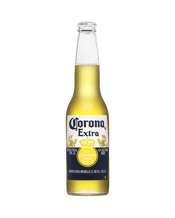
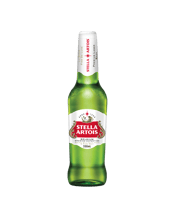
An AI machine developed by AB InBev (parent company to brands like Corona, Budweiser and Stella Artois) and Google Cloud cross-references real-time brewing data with tasting analysis inputs and carbon output to finetune elements of the brewing process with each and every brew. This means that production becomes exponentially more consistent while reducing emissions and waste simultaneously.
Beyond the factory floor, AI has already shown massive value where marketing and supply chain is concerned. Knowing where products perform best and who is buying them isn’t anything new, but AI is giving brands a clearer picture of these stats than ever before, allowing them to be hyper-targeted and responsive to new and shifting demands.
Just this year, Diageo – the global spirits conglomerate behind Johnnie Walker, Captain Morgan and Tanqueray – reported a 50% saving in their marketing spend thanks to a collaboration with CreativeX, which allowed them to optimise their digital placements every three minutes. From the beer ads you see on social media to the sale emails arriving in your inbox and beyond, the ability to be as relevant as possible, as often as possible, has two benefits: a lower marketing spend and a more receptive audience.
Arising from the technology’s demonstrable value, however, are serious ethical and creative questions. A lack of cultural and gender diversity within AI engineering teams has been well documented for years; an issue that many argue leads to flawed algorithmic biases and potentially disastrous outcomes for marginalised groups. Homogeneity of thought poses creative risks, too. A dwindling of thought leadership and original ideas have also been raised as hypothetical side effects of industry-wide AI implementation. If the same algorithms are used for product development and marketing, how long until everything looks (and tastes) the same?
Whichever way you cut it, AI is here to stay. That’s not necessarily a bad thing. Emerging from all of these applications is a common theme: there is no substitute for human creativity. Be it automation, machine learning or some other form of artificial intelligence, technology is only ever as good (or as creative!) as the people who operate it. If brands can remain diligent in navigating the balance between machine power and brain power, the bandwidth for human creativity could be exponential. We can all drink to that.
And with that, we’ll leave you with a final thought from Arthur C. Clarke’s mesmerising AI antagonist, 2001: A Space Odyssey’s HAL. “I am putting myself to the fullest possible use, which is all I think that any conscious entity can ever hope to do.” Amen, HAL. Amen.


%20(1)?$dans-daily-web-image$&hei=900)
?$dans-daily-web-image$&fmt=png-alpha&wid=800)