


Welcome to the big leagues, kid. You’re ready.
If you’re interested in single malts, Hannah Richardson (pictured top) – Spirit Specialist at Sydney’s Willoughby store – says not to wait. “It’s really not the same as blended whiskies,” she says. “Blended is mixed to take away the rough edges and make a more consistent spirit. Single malts are like people, they all have their own personality and history. So, drinking a single malt isn’t about the Goldilocks ‘just right’ moment. They are about the edge, the heat, the smokiness: whatever is the DNA of that distillery and craft that makes it an individual on the market.”
Hannah thinks people should experience the personality of a single malt wherever they can afford it. “There’s beauty in the soft, perfectionate blended zone, but don’t get stuck there. There’s so much complexity and intricacy to explore when it comes to single malts,” she explains.

Speaking of price, Hannah says an extra $30 should do it. “Single malts are usually from $80 and up, but if you can afford to spend an additional $30 and get into the $100+ range, you can get a really different dram and unique experience.”
When you do experience it, she has a few tips for making sure you make the most of it. Firstly, use all your senses. “See what it looks like in a proper tasting glass, not something with a too-wide rim because you want the glass to encapsulate all the oils and fumes as you taste.” Next, baby sips. “Hold it on your tongue and move it around your mouth in slow circles for 30 to 40 seconds. Your saliva diluting the whisky will open up the taste.” Remember, people, single malts are not for shots.
Before we get into her picks for single malt newbies, we had to ask Hannah’s must-try whisky: Waterford (no relation to the crystal). “It’s an Irish drop, with no age statement, in a bright blue bottle, and it’s the only label that says ‘single origin’. What that means is they have 36 plots of land, on each of which they grow the same strain of barley. The barley from one field never crosses with barley from another, and they make 36 different single malts. Each of those then have their own distilling process,” Hannah explains. “They’ve done years and years of research and experimentation with this whisky and it’s been their whole focus. They didn’t make a gin, or a vodka, they spent five years getting this right, and it truly shows. The story, the method, the result – wet hay, manuka honey, oats – it’s crisp and sweet and the palate just keeps going. It’s so interesting as an Irish take on something very Scottish.”
Read on for five more top whiskies Hannah recommends if you’re taking a step into single malts.
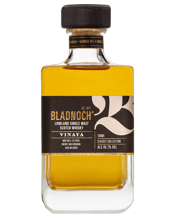
1. Bladnoch Vinaya Single Malt Scotch Whisky

Click image to shop

Click image to shop
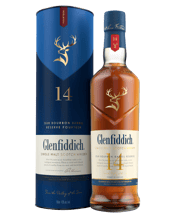
2. Glenfiddich 14 Year Old Bourbon Barrel Reserve
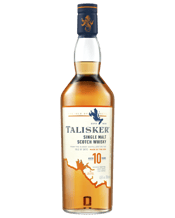
3. Talisker 10 Year Old Single Malt Scotch Whisky

Click image to shop

Click image to shop
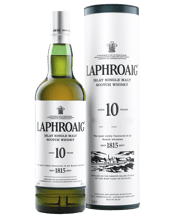
4. Laphroaig 10 Year Old Single Malt Scotch Whisky
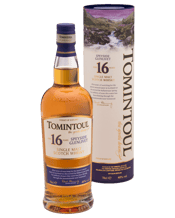
5. Tomintoul 16 Years Old Speyside Single Malt

Click image to shop

1. What are the best single malt whisky brands for newcomers to Scotch?
If you prefer a combination of vanilla, brown sugar and fruity notes, then Glenfiddich 14 Year Old Bourbon Barrel Reserve is a good option for single malt whisky. If you like a softer, smoother style, Tomintoul 16 Years Old Speyside Single Malt would be another excellent choice.
2. What flavours can you expect from single malt whisky?
The flavours of single malt whisky generally depend on the distilleries and expressions. Flavours commonly include vanilla, caramel, fruit, spice, oak, chocolate, honey and malt, while some whiskies develop stronger smoky, peaty or coastal notes.
3. Which single malt whisky is best for someone who likes a smooth, sweet flavour?
For someone who likes a smooth, sweet flavour, Tomintoul 16 Years Old Speyside Single Malt would be a good choice. You can also try Glenfiddich 14 Year Old Bourbon Barrel Reserve if you prefer fruity notes, vanilla and brown sugar.
