There’s so much to cheers to in this primo Victorian wine region, as two of its star new-wave producers reveal.
There was a time when vigneron Mac Forbes used to curse the Yarra Valley for being such a complex wine region, with its varying soil types, microclimates, altitudes and other elements. But that was then. “Now I think we’re blessed,” he says. “We have one hell of a region that offers up such a wide range of conditions.” Today, Mac is making the most of them by crafting distinctive wines that reflect this depth and diversity. And he’s just one of many producers breathing new life into this celebrated Victorian region.
The Yarra Valley may be the state’s oldest wine region, but here, among the rolling hills, history and tradition are combining with innovation and new approaches as producers better understand their sites, surrounding subregions, and resulting fruit and wines. It’s inevitable, really, as something is always going on in our wine regions – even the most established. And with the first vines planted in the Yarra Valley in the 1830s, this region has a long history, despite its wine production halting from the 1930s to the late ’60s.
Since then, the cool-climate Yarra Valley has claimed its place as one of our finest areas for growing and making wine, particularly chardonnay and pinot noir. These varieties may be the long-recognised stars, but the region’s medium-bodied cabernet is in a class of its own, as are its cabernet blends. Increasingly, other varieties are thriving, too – grapes such as nebbiolo and sangiovese are finding a happy home here, and they’re helping to shift this wine landscape just as much as the newer kids on the block.

%20(1)?$dans-daily-web-image$&hei=900)
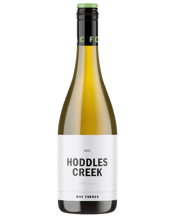
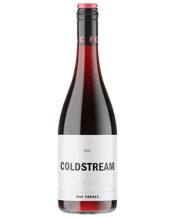
For Mac, who grew up in the Yarra Valley, it’s all about showcasing the subregions and the individual characters that shine through in their fruit. He began making his own Yarra Valley wine in 2011 after working at various wineries, including the region’s iconic Mount Mary, and others across Europe, including Austria and Portugal. Eventually, though, Mac decided it was time to come home. “I realised I had unfinished business in terms of understanding this complex region,” he says. And so, he began sourcing fruit from various sites across the Yarra Valley, and the Mac Forbes brand was born.
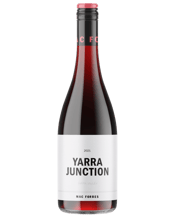
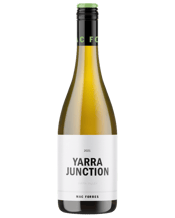
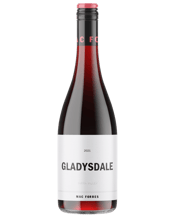
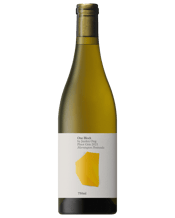
Mac’s wine collection is made up of several ranges, but the Village wines are an excellent reflection of his overarching approach. Each bottle shouts its subregion of origin front and centre on the label rather than listing the grape variety. It’s a different way of doing things here in Australia – he has a pinot noir and chardonnay both simply labelled as “Gladysdale” and another duo labelled as “Yarra Junction”, for example – but Mac is committed, even if they do make a lot of wines as a result. “It’s completely stupid and goes against all good business models,” he jokes about the quantity they produce. “But it works for us, and every wine ends up having a good reason, so it’s hard not to continue with it.”
Now with a vineyard of their own and managing several others, Mac has worked closely with the local Indigenous community to learn as much as he can about these tending these sites in the best possible way. With water a core focus, Mac is passionate about regenerative farming, which he sees as fundamental to expressing each vineyard’s characters. His viticultural practices include planting species to help lift water tables and attract a greater diversity of insect life, among many other strategies. “If we’re doing our job well, then the vines are just a by-product of the environment,” Mac says. “If they’re really resilient, then they’re going to express a far more unique story, rather than if we farm them all the same way. The more we intervene, the more we dilute.”


Of course, smart viticulture, brilliant wines and working with subregional fruit is nothing new for the Yarra Valley. This region is full of legendary wineries – names like Coldstream Hills, Yering Station, Oakridge, Yarra Yering, Yeringberg… The list goes on. And it’s this track history that drew Jayden Ong to the region 10 years ago, having previously completed a winemaking degree while running Melbourne’s Cumulus Inc. and Cumulus Up – he’s a founding partner in both beloved venues. “The ability to grow internationally competitive chardonnay was the primary focus,” Jayden says of his pull to the region. “The accessibility to Melbourne was also important as I like to visit Cumulus every week, but I believe the Yarra Valley is diverse, and there are still things to be discovered here. With an industry that’s only 200 years old in Australia, we’re still at the beginning!”
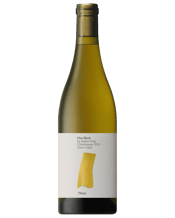
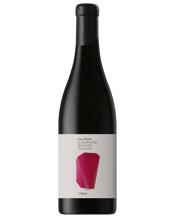
Now with a popular cellar door and restaurant, the Jayden Ong operation is in a great place. They own and run a vineyard, and work with six premium local growers to make four ranges of seriously classy wine – Jayden Ong, One Block, La Maison de Ong and Moonlit Forest. And while their cellar door is beautiful, there’s nothing hoity-toity about it – this space feels much more casual and relaxed. Sitting right in the middle of town, next door to a mechanic, it joins the likes of Payten & Jones, another newer producer that’s also set up home smack-bang in Healesville.
Since 2016, Jayden and his small team have also run everything in-house, from growing and bottling to packaging and storage. They don’t even use any distributors to sell their wine, choosing to do it themselves. “It was a conscious move not to use any distributors to sell our wines, choosing to do it ourselves and work directly with retailers and restaurants,” Jayden says. The majority of his wines are chardonnay and pinot noir, but the wider collection includes shiraz, pinot gris, cabernet and sauvignon blanc, which Jayden says especially benefits from a little skin contact.
“We’re working very traditionally in a lot of ways, and what we’re looking for is balance and texture,” he says. “I believe 80% of the job is done before the fruit arrives at the winery, which comes from farming the vines in a particular way.” For Jayden, though, despite being one of the newer producers in town, he sees more similarities than differences among the region’s producers. “What we have in common is that we’re all seeking quality. At the end of the day, it’s really very simple – we all want to make great wine.”